
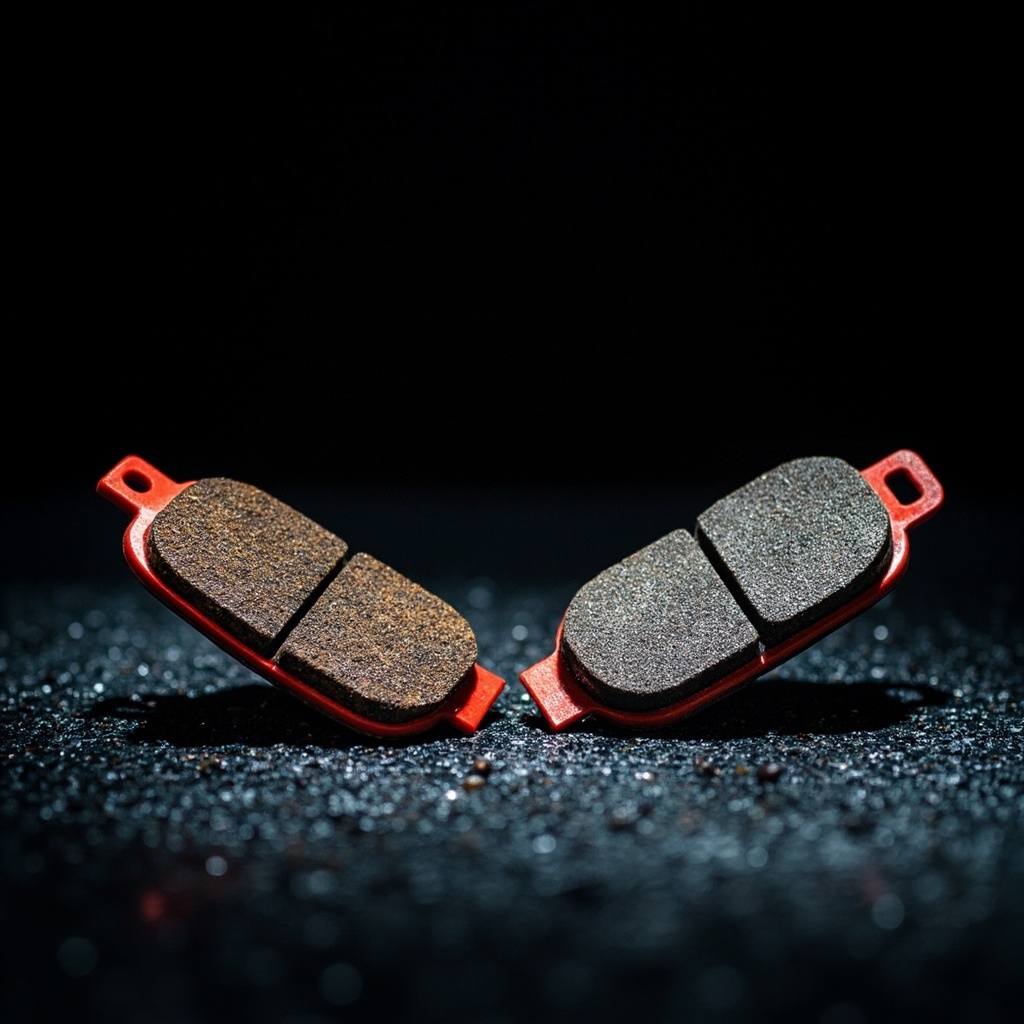
 Stop me if you’ve heard this one before: your brake pads are either too hot to handle or too slippery to stop. That’s the dirty little secret of the automotive aftermarket. For decades, engineers have been locked in a silent war with physics, trying to marry two materials that fundamentally hate each other. You want a pad that bites hard when you stomp the pedal, but you also need it to survive the inferno of a mountain descent without turning into a glassy, useless hockey puck. This isn’t just engineering; it’s alchemy.
Let’s cut the fluff. The real problem isn’t finding a material that does one thing well. The problem is the trade-off. A High-Carbon Graphite friction coefficient usually comes from aggressive, semi-metallic compounds that chew through rotors and scream like a banshee. On the flip side, a material that dissipates heat like a dream—think high copper content or ceramic matrices—often feels numb and wooden under your foot. You get a smooth, quiet ride until you need to panic stop, and suddenly you’re praying to the brake gods.
Here is where the smart money shifts. We are not talking about compromise anymore. We are talking about engineered stratification. The best pads on the market today are no longer a single homogenous block of material. They are layered, like a high-performance tire. The top layer? That’s your bite. A specialized resin matrix packed with aramid fibers and ceramic particles that deliver a sharp, linear friction curve from the first tap. But the secret sauce is the underlayer—a thermally conductive base plate that acts like a heat sink, pulling energy away from the rotor surface and dumping it into the caliper housing before it can cause fade.
Why does this matter to you? Because brake fade is a liar. It tells you your brakes are gone when they are just overwhelmed. A pad with a low thermal conductivity coefficient holds that heat right at the surface. The resin boils, the friction coefficient plummets, and you get that terrifying “pedal to the floor” sensation. Our solution flips the script. By engineering a gradient of thermal conductivity—high at the rotor interface, lower as you move toward the backing plate—we create a system that self-regulates. The pad gets hot enough to grip, but never hot enough to glaze.
And the friction coefficient? We stopped chasing a single number. A static friction coefficient of 0.45 is useless if it drops to 0.25 when the rotor hits 600 degrees. Instead, we target a stable, plateaued curve. The pad should feel exactly the same at 100 degrees as it does at 500 degrees. That’s the hallmark of a premium product. It’s predictable. It’s boring. And boring is exactly what you want when your life depends on a two-second stop.
Don’t fall for the marketing hype that screams “highest friction!” or “cold performance!” Those are easy targets. The real test is a full lap of a track, or a heavy trailer descending a 6% grade. If your pads can maintain a consistent coefficient while keeping the rotor temperature in check, you’ve won. That is the balancing act. And we just gave you the tightrope.